Accelerating Lab Testing: Robotics for Speed, Safety, and Precision

This white paper is the first in a series of three papers. It comes from ABB Robotics and METTLER TOLEDO. The paper examines the major trends and concerns that drive robotic automation in laboratories. It also discusses key available technologies and their benefits. Finally, it explains how to implement strategies effectively to achieve the best outcomes.

Approach

Methodology

Questions

Current State of Robotic Laboratory Automation

Scientist holding test tubes in modern laboratory

“It’s not that we don’t want to automate. Most of us are desperate to, but until we can, we’re stuck doing things by hand that really should have been automated years ago.”

VoC Contributor’s Insight

Crucially, the benefits of robotic automation also help to speed up the various processes involved in developing and bringing new products to market. In the words of one respondent, “Automated systems generate more data in a short time than was possible over the past decade. By combining this with the enhanced speed delivered by automated processes, we can now accelerate idea-to-experiment cycles at the research and development stage, and test and validate concepts faster.”

Key Challenges and Focus Areas

Scientist handling test tubes in lab setting

“The way we work today might have made sense 20 years ago. But it doesn’t work anymore, especially if we want to grow, compete, and innovate.”

VoC Contributor’s Insight

Risks and Inefficiencies of Manual Processes

Sample Prep Delays Impact Productivity

Data Variability in Manual Processing

“We sometimes don’t catch mistakes until several steps down the line, when we realize something’s gone wrong and we have to start again. It’s frustrating and costly,” said one interviewee. The linear nature of many manual workflows also increases the risk of bottlenecks. A single delay, such as late sample preparation or instrument calibration, can potentially hold up an entire day’s work, forcing teams to reschedule planned experiments or reallocate their time to other tasks. The impact of these interruptions cascades, delaying not just individual experiments, but entire projects or development cycles."

icon

Robotic Automation's Role in Growth

Everyday friction, wasted talent, and fragmented systems highlight robotic automation’s future role in unlocking lab potential and laying the foundations for growth.

icon

Boosting Lab Innovation and Efficiency

When done well, adding robotic automation speeds up innovation. It helps laboratories follow rules. It allows skilled workers to focus on more important tasks. This approach enables laboratories to deliver results faster and more reliably. They can also remain competitive.

icon

Streamlining Labs

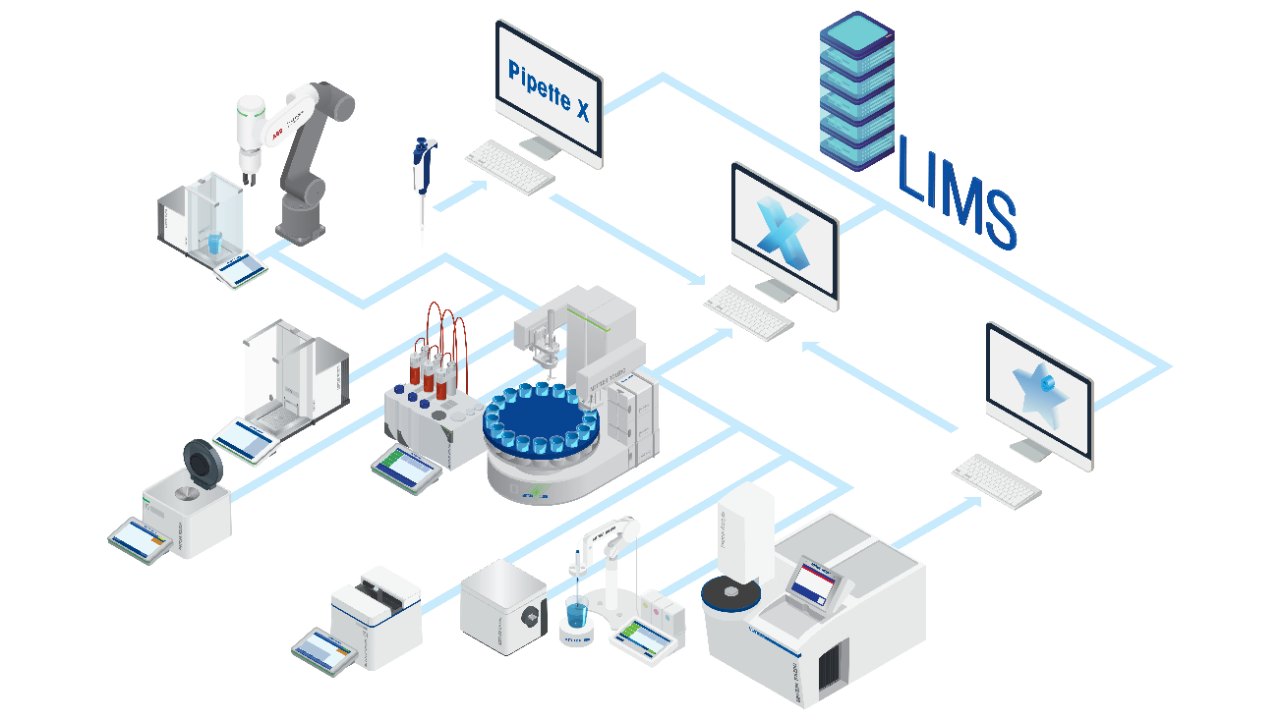
To achieve this, organizations should look to streamline processes, expand automation beyond basic instrumentation, integrate data solutions, and simplify reporting. Retrofitting existing labs with modular, interoperable systems, and designing new ones with scalability in mind enables progress without major disruption.

Navigating Adoption Challenges

Scientists working in lab environment

“Mindset is one of the biggest obstacles. People are used to being in control of every step. When you introduce automation, some see it as losing control, not gaining capability.”

VoC Contributor’s Insight

Cultural and Organizational Resistance

Technical limitations and Integration Barriers

Financial Constraints and Strategic Uncertainty

Overcoming the Barriers

icon

Correct Automation

Defining the right automated solution and understanding how to articulate its benefits clearly to management is of key importance in getting buy-in from all stakeholders.


icon

Communication

Clear communication is also essential when rolling out the solution to users. Transparent communication, inclusivity, and leadership support are all key tools for overcoming resistance. Starting small and demonstrating the direct benefits can often be the best way to win acceptance from skeptical or reluctant staff.

icon

Transforming Labs

Ultimately, labs that treat robotic automation not merely as a tool but as a transformational initiative that encompasses culture, infrastructure, and business strategy, will be in the best position to lead the next era of scientific innovation.

Conclusion - Laying the Foundations

Glossary of Acronyms and Terminology

AI-Powered Full Glossary

Je veux...
Besoin d'aide?
Notre équipe est là pour vous aider. Venez discuter avec nos experts.