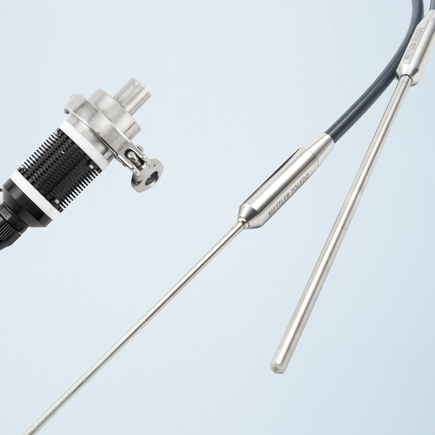
Fine Chemicals: Tracking Exothermic Hydrogenation Steps With RC1

Delgado, J., Salcedo, W. N. V., Devouge-Boyer, C., Hebert, J., Legros, J., Renou, B., Held, C., Grenman, H., & Leveneur, S. (2023). Reaction enthalpies for the hydrogenation of alkyl levulinates and levulinic acid on Ru/C– influence of experimental conditions and alkyl chain length. Chemical Engineering Research & Design, 171, 289–298. https://doi.org/10.1016/j.psep.2023.01.025

This example presents a study on how to optimize catalysts for batch hydrogenation reactions using automated high-throughput experimentation. The authors describe how they used a combination of ReactIR™ in-situ FTIR spectroscopy and RC1 high-pressure reaction calorimeter to monitor and control the hydrogenation process and perform in-situ measurements of reaction kinetics and product formation.

The study showed that the automated high-throughput experimentation approach with METTLER TOLEDO instruments can significantly improve the efficiency and accuracy of catalyst optimization for batch hydrogenation reactions. The authors noted that the use of ReactIR and RC1 reactor control unit enabled real-time monitoring of the reaction, which facilitated the identification of optimal catalyst conditions based on reaction kinetics and product formation. The use of FTIR and reaction calorimetry instruments for optimizing hydrogenation processes and catalysts led to faster and more efficient reaction optimization in batch hydrogenation.

Fine Chemicals: Efficient Hydrogenation Catalyst Screening Using In-Situ FTIR

Baimuratova, R. K., Andreeva, A. V., Uflyand, I. E., Shilov, G. V., Bukharbayeva, F. U., Zharmagambetova, A. K., & Dzhardimalieva, G. I. (2022). Synthesis and Catalytic Activity in the Hydrogenation Reaction of Palladium-Doped Metal-Organic Frameworks Based on Oxo-Centered Zirconium Complexes. Journal of Composites Science6(10), 299. https://doi.org/10.3390/jcs6100299

The authors describe the use of METTLER TOLEDO instruments such as the EasyMax automated reactor system and in-situ FTIR probe for real-time monitoring of hydrogenation reactions. They also discuss the integration of a robotic platform to automate the process of reaction screening, allowing for high-throughput optimization of reaction conditions.

Automated platforms help reduce the time and resources required for optimizing hydrogenation reactions, as well as improving the efficiency and accuracy of the process. The use of in-situ FTIR spectroscopy instruments in combination with the automated platform provides a reliable and efficient method for screening and developing hydrogenation reactions.

Pharmaceutical: Asymmetric Transfer Hydrogenation

Zhang, Y., Yuan, M., Liu, W., Xie, J., & Zhou, Q. (2018). Iridium-Catalyzed asymmetric transfer hydrogenation of alkynyl ketones using sodium formate and ethanol as hydrogen sources. Organic Letters20(15), 4486–4489. https://doi.org/10.1021/acs.orglett.8b01787

This example describes a new method for the asymmetric transfer hydrogenation of alkynyl ketones using iridium catalysts. The authors discuss the use ReactIR spectrometer to monitor the progress of the reaction in real time, allowing them to optimize the reaction conditions and monitor the reaction intermediates. The use of EasyMax™ reactor system for the reaction setup allowed for precise control of the reaction parameters such as temperature and stirring speed.

The combination of the in-situ reaction monitoring instruments with the iridium catalyst system enabled the researchers to perform the reaction with high reproducibility and accuracy. This approach could be extended to other catalytic reactions, allowing for more efficient and accurate reaction optimization and analysis. 

Catalytic Hydrogenation of Nitrobenzene to Aniline

Catalytic Hydrogenation of Nitrobenzene to Aniline

This application note outlines the reduction of nitrobenzene using a commercially available catalyst...

Endpoint Detection of a Hydrogenation

Endpoint Detection of a Hydrogenation

Automated sampling of a hydrogenation at 5 bar pressure improved product quality by enabling the stu...

tandem hydroformylation hydrogenation

Tandem Hydroformylation/Hydrogenation of Alkenes

Real time, in-situ mid-FTIR reaction monitoring leads to a greater understanding of catalyst activit...

Acid Catalyzed Transfer Hydrogenation

Acid Catalyzed Transfer Hydrogenation

Asymmetric organocatalytic hydrogenation of benzoxazines in continuous-flow microreactors as a metal...

Hydrogenation By-Products Formation

Avoid By-Product Formation in Hydrogenation

This white paper discusses the root cause of by-product formation in a hydrogenation reaction. and h...

Reaction Analysis Modeling to Drive Green Chemistry and Sustainable Development

Examples of Reaction Control, Analysis, and Modeling to Drive Green Chemistry and Sustainable Development

Drive sustainable development through green chemistry practices by achieving efficiency and reducing...

Guide to Process Safety

Guide to Chemical Process Safety

Guide to Process Safety discusses challenges to consider when designing a safe process including the...

Reaction Calorimetry Guide

Reaction Calorimetry Guide

Minimize risks and ensure the safety of your lab and personnel. Our guide covers all aspects of reac...

development of a transfer hydrogenation controlled by nitrogen flow

Development of a Transfer Hydrogenation Controlled by Nitrogen Flow

In this presentation, we review the development of Belzutifan and how the Merck team applied concept...

What is a hydrogenation reaction with an example?

In a chemical process called hydrogenation, hydrogen is added to a molecule. At normal temperatures, hydrogenation is not thermodynamically advantageous, thus a catalyst is required. This catalyst is often made of metal. Margarine, mineral turpentine, and aniline are a few examples of goods that have been hydrogenated.

What type of reaction is hydrogenation?

A hydrogenation process, also known as a reduction reaction, occurs when hydrogen molecules are added to an alkene. Alkanes are created via an addition reaction between alkenes and hydrogen gas in the presence of a catalyst, usually metal.

What is the main purpose of hydrogenation?

Hydrogenation is a process widely used in the chemical industry to add hydrogen to unsaturated organic compounds, with the aim of producing saturated compounds. Chemical engineers are heavily involved in the design and optimization of hydrogenation processes, which play a vital role in various industries, including food and fuel production.

In the food industry, hydrogenation is commonly used to produce solid fats from liquid oils, such as margarine and shortening. By hydrogenating vegetable oils, their stability, functional properties, and overall quality can be improved. Similarly, in fuel production, the hydrogenation of unsaturated hydrocarbons in crude oil can produce more stable and less reactive compounds.

As a crucial part of the hydrogenation process, chemical engineers must select appropriate catalysts, design reactors, and process conditions to optimize conversion and selectivity, and manage safety considerations associated with high-pressure hydrogenation reactions. Additionally, they must strive to develop sustainable and environmentally friendly hydrogenation processes that minimize waste and energy consumption.
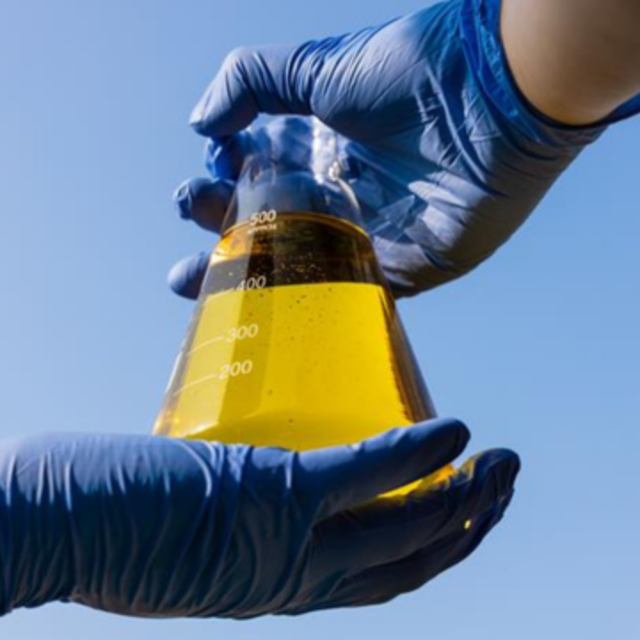
What are the reaction conditions for hydrogenation?

The typical reaction conditions for hydrogenation depend on the specific reaction and the reactants involved. Some common parameters that are often used in hydrogenation reactions include:

  • Temperature
  • Pressure
  • Catalyst
  • Solvent
  • Hydrogen source
  • Reaction time

The reaction conditions used for hydrogenation reactions depend on the specific reactants and the desired product, and optimization of these conditions can lead to improved reaction efficiency and selectivity.

I want to…
Need assistance?
Our team is here to achieve your goals! Speak with our experts.