Live Webinar: Differential Scanning Calorimetry
Learn Basic DSC Principles and Find Useful Applications for Your Workplace
نظرة عامة على البرنامج
- Basic principles of DSC with an explanation of power compensation and heat flux modes
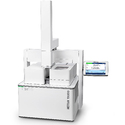
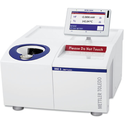
- Important components of the DSC measurement cell, the innovative sensor, and modules for specialized applications
- Measurement parameters such as the temperature program and choice of atmosphere
- Why you should use DSC for your analysis
- Application examples for different industries
- Live Q&A session
Differential Scanning Calorimetry (DSC) is used to study the behavior of materials as they respond to a defined temperature program. The technique measures the heat, in mW, absorbed or released by a sample as it is heated, cooled, or held at a constant temperature. Measurement results are presented in the form of a curve, from which the glass transition, crystallization, melting, and many other thermal properties can be determined.
The DSC technique has applications in a wide range of industries. For example, checking the “fingerprint” of a measurement curve is a common application for quality control purposes. Other applications include investigating the influence of additives or different processing methods on a substance.
Join our webinar on DSC to gain knowledge and get the opportunity to ask our experts your questions!
Expert

Dr. Teresa Dennenwaldt
Dr. Teresa Dennenwaldt obtained her PhD in chemistry in 2013 and completed a postdoc at the Ecole Polytechnique Fédérale de Lausanne, Switzerland in the field of electron microscopy and spectroscopy. In 2018, she joined METTLER TOLEDO as an application specialist for Thermal Analysis. In her current position, she expertly uses, teaches, and supports DSC, TGA, TMA, and DMA instruments at the METTLER TOLEDO head office in Switzerland.